5 Ways Going to Bed Angry Can Actually Help Your Marriage
Marriage


Audio By Carbonatix
1:00 AM on Thursday, December 4
By Ashleigh Slater, Marriage

1. Going to bed mad helps you play the long game toward unity.
It may seem like “going to be mad” and playing the “long game toward unity” aren’t compatible ideas. But surprisingly, they are. Not all arguments can be resolved quickly. Yet, when we feel pressure to rush reconciliation, we may be tempted to settle for some form of false peace. False peace is when we choose to avoid conflict, hide our true feelings, or sweep issues under the rug rather than addressing them.
In our early years of marriage, my primary conflict resolution style hinged on avoiding and hiding. On the outside, I acted as if everything was okay when I was upset, but it wasn’t. Instead, I’d donned the mask of false peace. As a result, Ted and I were divided by my unspoken and unresolved feelings. Since then, I’ve learned that false peace is not my friend. Instead, it’s an enemy of unity because it pretends rather than resolves.
In Matthew 12:25, Jesus talks about what happens when division takes up residence in our relationships. He explains, “Every kingdom divided against itself is laid to waste, and no city or house divided against itself will stand” (ESV). Choosing false peace allows unspoken issues to fester and eat away at our marriage. When this happens, it becomes harder for us to practice Paul’s words in Ephesians 4:31 to “let all bitterness and wrath and anger and clamour and slander be put away from you, along with all malice” (ESV).
Unity is a “must-have” for a strong and healthy marriage. And when we realize that it’s okay not to fix everything before bed, we determine not to settle for false peace. Instead, we create the time and space for humility, honesty, and accountability to draw us back together in true unity.

2. Going to bed mad helps you de-escalate conflict.
The later Ted and I stay up trying to resolve an argument, the more tired we become. And, I don’t know about you and your spouse, but when our bodies, minds, and emotions are exhausted, we’re more likely to escalate our disagreement in unhealthy ways. In our sleepiness, we’re not always thinking clearly or logically about ourselves, each other, or the situation. As a result, we are both more prone to making accusations, assuming the worst, or speaking harshly. We’re also more likely to lean into pride rather than embrace humility.
So, when we choose to pause reconciliation efforts and go to sleep, it prevents us from making the conflict worse. It also keeps us from further sinning in our anger, which Paul warns us against in the first part of Ephesians 4:26.
Does sleep really make that big of a difference in helping to calm our emotions so that we’re able to more logically approach conflict? Experts say it does. Clinical psychologist Dr. Sabrina Romanoff told CNN Health that sleep “reduces your brain’s activity to negative stimuli—or perceived negative stimuli—helps process emotions and restores your ability to approach problems rationally. A well-rested brain is better equipped to engage in thoughtful, respectful communication.”
Sometimes, as couples, we need to stop interacting and go to sleep before we can make progress in resolving a conflict. Then, when we wake up, we’re ready to return to the work of restoring unity in a healthy and productive manner.

3. Going to bed mad helps you not say things you’ll regret.
Do you ever struggle to control your words during a conflict? I sometimes do, and I don’t believe I’m alone. Add to that the exhausted bodies, minds, and emotions I mentioned earlier, and we have a disastrous recipe for escalation followed by regret.
What might we wish we hadn’t said in the heat of the moment? It may be that we revisit old issues that should have been long forgiven and forgotten. Or maybe we forget to use “I feel” statements and instead hurl “you never” ones. Perhaps it’s not so much the words, but the tone we use or the attitude we have.
Paul seemed to understand that when we are angry, a lot of us are tempted to say things we shouldn’t in ways that we shouldn’t. So, a few verses after his admonition not to let the sun go down on our anger in Ephesians 4:26, he turns his attention to our words. In verse 29, he instructs, “Let no corrupting talk come out of your mouths, but only such as is good for building up, as fits the occasion, that it may give grace to those who hear” (ESV). Another translation says, “Let everything you say be good and helpful” (NLT).
When we hit pause and go to bed, we are practicing self-awareness and self-control. We are self-aware as we realize that in our current state, our words may not prove to be good and helpful. And we are self-controlled as we choose to hold our tongue rather than speak words that we may later regret.

4. Going to bed mad helps you evaluate where to take responsibility.
Paul isn’t the first person in Scripture to warn us against sinning in our anger. In Psalm 4:4, David writes, “Don’t sin by letting anger control you.” He then advises us to “think about it overnight and remain silent” (NLT).
David was no stranger to conflict. He wrote these words while fleeing from his son, Absalom, who had conspired and led a rebellion against him. David had every right to feel angry at Absalom and even retaliate. Yet here, David reminds himself not to be controlled by his anger, but to think about the situation overnight.
When we go to bed angry, it’s easy to find ourselves ruminating on how our spouse has hurt or angered us. We need to be mindful to instead use the time to identify where we can take responsibility. In Matthew 7:3–5, Jesus encourages those listening to deal with “the log” in their own eye before worrying about “a speck” in someone else’s eye. While there will be occasional instances when our spouse is entirely in the wrong, in most conflicts, we both have “logs” to admit and address. As we drift off to sleep, we have time to search our hearts.
How do we pinpoint the “log” in our eye? It begins with attempting to see the situation from our spouse’s perspective while lying quietly in bed. Have they raised valid points about how we’ve hurt them? Could we have listened better or been more sensitive? What can we specifically own and apologise for? We can’t repair what we won’t admit. Honesty in identifying our part returns us to the conversation with a humble heart, ready to do what it takes to repair the relationship.
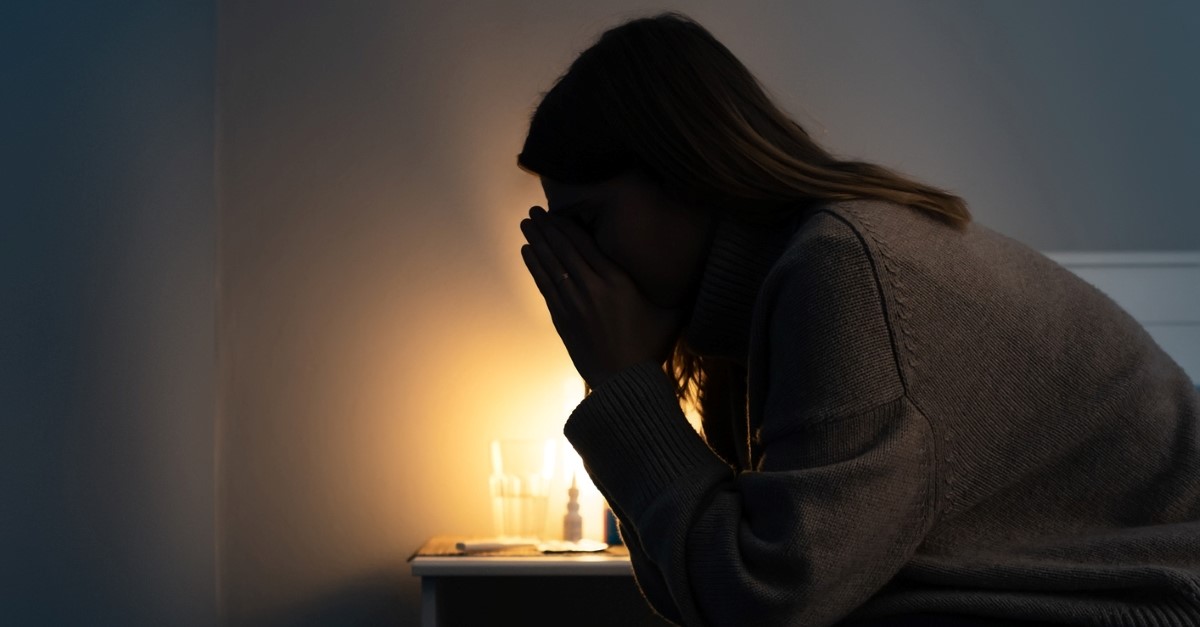
5. Going to be mad helps deepen how much you trust God with your marriage.
If you’ve ever listened to our Team Us podcast, you know that Ted and I are all about practical strategies that help couples strengthen their marriages. I love a good “five simple tips” plan of action. However, none of us should rely exclusively on the wisdom of marriage mentors and relationship experts or on the strategies we learn.
We need to trust God first and foremost by asking Him for His wisdom and guidance. Sometimes, it’s hard to trust Him with our marriage. We may fear that He’s going to ask us to change too much, while our spouse will change too little. So instead, we lean on our own understanding and cater to our own desires, rather than surrendering to Him.
But that’s why going to bed mad helps. It makes us hit “pause” on our own efforts. It encourages us to turn away from following our often selfish solutions. It allows us to bring it all to God and say, “Your will be done.” And, as we wait for Him to work in our hearts and in the relationship, we deepen our trust in Him.
Over two decades into marriage, Ted and I don’t always kiss and make up before we go to bed, and that’s okay. We’ve learned that the “or worse” of our wedding vows may sometimes involve us unhappily sleeping side by side for a night or two. However, we’ve also discovered that if we genuinely want the “for better,” then it’s worth slowing down. We understand that not rushing reconciliation, but instead trusting God and playing the long game toward unity, is good for our relationship.
